
Home » Passenger Rights in Uber/Lyft Rideshare Accidents


Uber and Lyft carry commercial insurance policies that apply whenever their app is in use — but the level of coverage depends on what the driver was doing at the exact time of the crash.
Understanding these coverage stages is critical for determining who pays for your medical bills and other damages.
If the rideshare driver isn’t logged into the Uber or Lyft app, the company’s insurance coverage does not apply.
Any accident in this scenario is treated as a regular car accident, and the driver’s personal auto insurance is responsible for covering your injuries.
This often creates confusion for passengers who assume rideshare coverage applies automatically — it doesn’t until the app is active.
Once the driver logs in and is waiting for a ride request, limited coverage applies. Uber and Lyft provide up to:
$50,000 for bodily injury per person
$100,000 per accident total
$25,000 for property damage
If another driver is at fault during this stage, their liability insurance would still be primary — but Uber/Lyft’s policy may fill in the gaps if that driver’s coverage is insufficient.
This is when the full $1 million rideshare insurance policy kicks in. Both Uber and Lyft maintain:
Up to $1 million in third-party liability coverage
Uninsured/underinsured motorist coverage (UM/UIM)
Contingent comprehensive and collision coverage
If you were inside the vehicle when the accident occurred, this policy should protect you — even if another driver caused the crash or fled the scene.
Liability in rideshare accidents often involves multiple parties, and each insurer may try to shift blame elsewhere.
Depending on the circumstances, potential defendants could include:
The rideshare driver, for negligent driving or distracted operation
Another motorist, for running a light, speeding, or failing to yield
Uber or Lyft, for negligent hiring or failure to deactivate unsafe drivers
Vehicle manufacturers, if a defective part caused or worsened the crash
Government entities, if poor road design or lack of signage contributed
Because each party may carry separate insurance, determining who pays — and in what order — requires careful investigation. Check out common legal issues in passenger claims.
Suppose your Uber driver is rear-ended by another car while you’re a passenger. You suffer neck and back injuries, but the at-fault driver only carries the state minimum insurance.
In that case, your attorney may pursue compensation from:
The at-fault driver’s insurer (primary liability)
Uber’s uninsured/underinsured motorist coverage (secondary coverage)
This layered approach ensures your expenses are covered, even if one policy falls short.
If you were injured in an Uber or Lyft accident, you may be eligible for both economic and non-economic damages, including:
Medical expenses: emergency care, physical therapy, surgery, medication
Lost wages: compensation for missed work and reduced future earnings
Pain and suffering: for physical pain and emotional distress
Loss of enjoyment of life: if your injury impacts your daily activities
Permanent disability or disfigurement
Wrongful death damages: if a loved one was killed in a rideshare accident
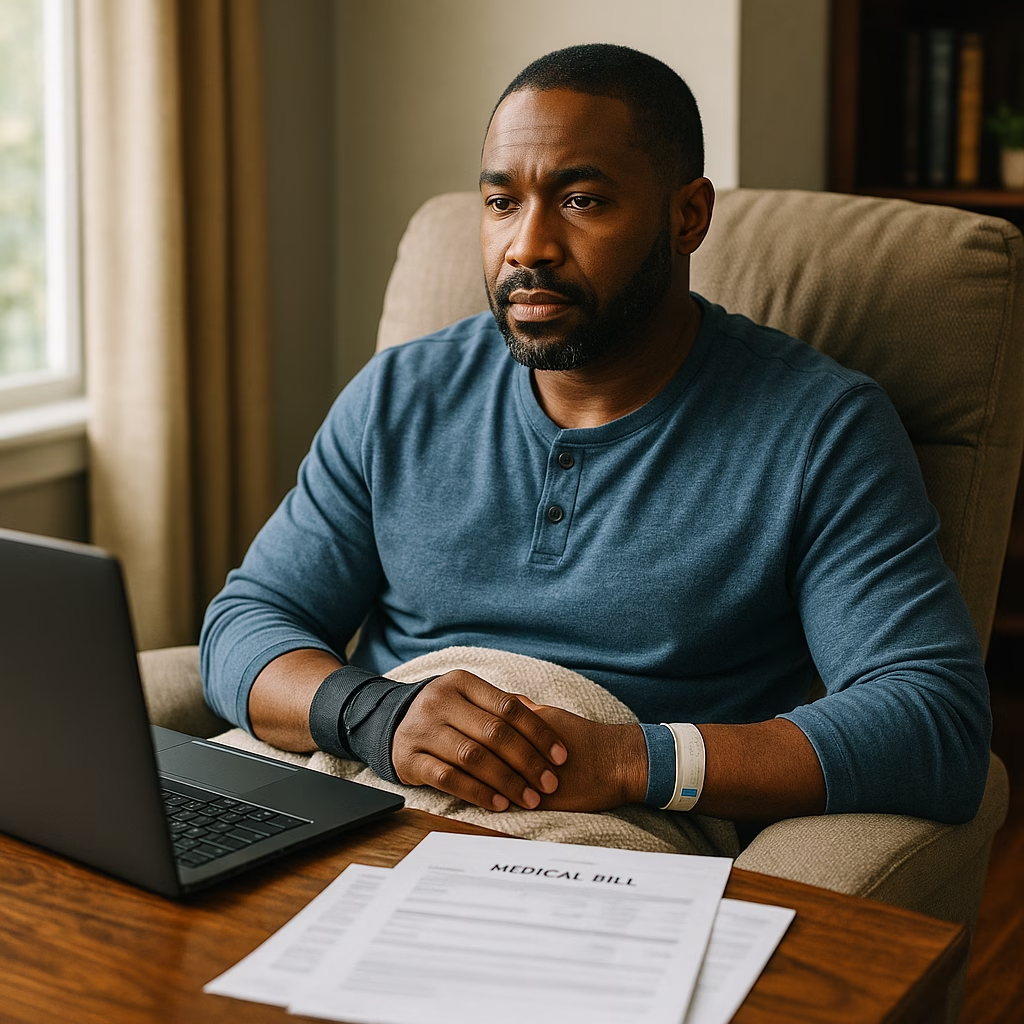
These damages can add up quickly — and rideshare insurers are known to offer quick settlements before passengers realize the true cost of their injuries.
1. Disputed Liability
Uber and Lyft may claim their driver was not logged in or wasn’t “actively engaged” in a ride to avoid coverage. This is why knowing passenger rights after a car accident is crucial.
2. Independent Contractor Loophole
Because rideshare drivers are classified as independent contractors, Uber and Lyft often deny responsibility for their actions. An experienced lawyer can challenge this by proving company negligence in hiring or safety enforcement.
3. App Data Access
Trip records, GPS data, and timestamps within the Uber or Lyft app are key pieces of evidence. 833-GET-PAID knows how to obtain these records through subpoenas or preservation requests.
4. Low Settlement Offers
Insurance companies frequently try to resolve these cases quickly and cheaply. Accepting an early settlement could mean giving up thousands of dollars you’re legally entitled to. You may also wonder: “can I sue my friend if they caused the crash?”
Call 911 — request police and medical assistance.
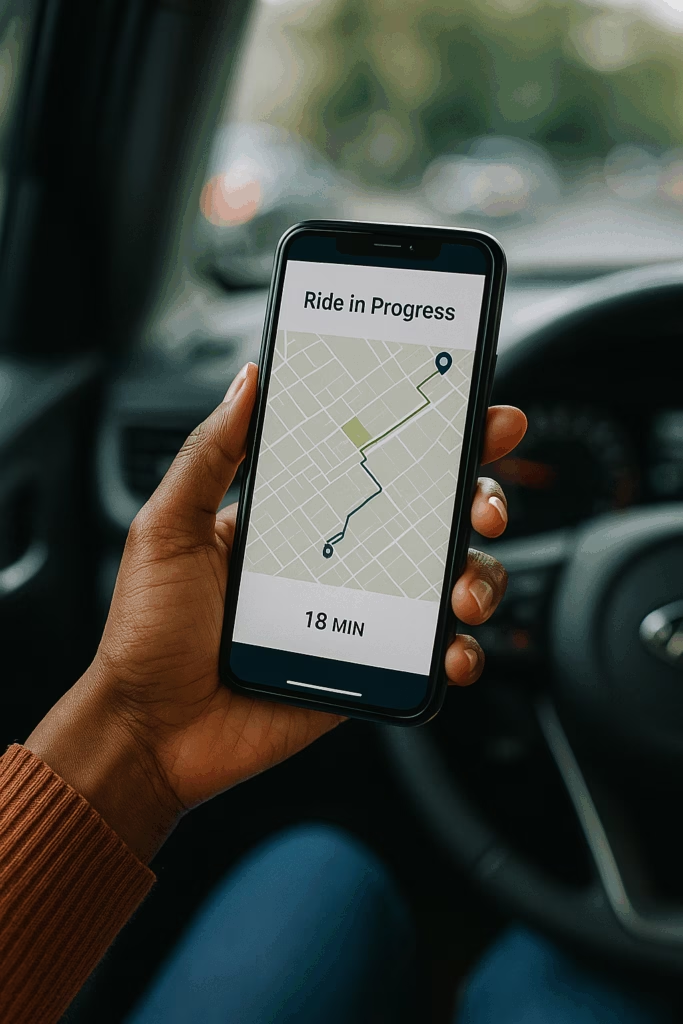
Take screenshots of your ride details, timestamps, and driver profile.
Get contact information for witnesses and other drivers involved.
Document injuries and property damage with photos.
Avoid speaking to insurance adjusters before consulting a lawyer.
Contact 833-GET-PAID — our team will handle the insurance companies while you focus on recovery.
Most states require personal injury claims to be filed within two years of the accident date (the statute of limitations).
However, because rideshare cases involve multiple corporate insurers, you may need to file certain notices much sooner.
833-GET-PAID ensures no deadlines are missed — and that evidence such as app data and ride records is preserved before it disappears.
When you hire 833-GET-PAID, you get a team that knows how to handle rideshare cases from every angle. We:
Investigate fault and insurance coverage
Demand data directly from Uber or Lyft
Handle negotiations with insurers
File lawsuits when necessary to force fair settlements
Keep you informed every step of the way
We’ve seen firsthand how confusing these cases can be. You don’t have to face powerful rideshare insurers alone.
If you were injured as a passenger in an Uber or Lyft, you need to know your rights as a passenger after a car accident — but time is limited.
833-GET-PAID can help you understand the insurance process, identify every liable party, and pursue the maximum compensation you deserve.
Contact 833-GET-PAID today for a free case review.
Let us deal with Uber and Lyft — you focus on getting better.

If your rideshare driver caused the crash, Uber or Lyft’s $1 million liability policy covers your injuries. If another driver caused the accident, that driver’s insurance is responsible. You may also recover through the rideshare company’s uninsured/underinsured motorist coverage (UM/UIM) if needed.
In most cases, no. Rideshare drivers are classified as independent contractors, not employees. However, you may have a case against Uber or Lyft if they were negligent in hiring, failed to remove unsafe drivers, or ignored safety complaints.
If the driver was not logged into the rideshare app, their personal car insurance applies — not Uber or Lyft’s commercial policy. The company’s coverage only starts once the app is active.
Call 911, get medical care, and take screenshots of your ride details, driver info, and trip timeline in the app. Gather witness contacts, document injuries, and contact a lawyer before speaking with any insurance adjusters.
Most states give you two years from the accident date to file a personal injury claim. However, rideshare claims often involve multiple insurers, so reporting and documentation should begin as soon as possible to protect your rights.