
Home » Car Accidents and Traffic Violations: Who’s at Fault?

You’re in a crash, the police show up, and before you even get the tow truck on the way…you’re handed a ticket.
Now you’re wondering:
“That’s it, right? I’m automatically at fault. My claim is dead.”
Not so fast.
Traffic tickets matter a lot in car accident claims, but they do not automatically decide fault. Insurance companies, judges, and juries look at the whole story: what each driver did, which traffic laws were broken, and what the evidence actually shows.
This guide from 833-GET-PAID walks through how car accident fault and traffic violations really work, and what to do if you’re stuck with a ticket after a crash.
A ticket is evidence, not a verdict. Getting a traffic citation after a crash is important evidence, but it doesn’t automatically make you legally at fault for the accident.
Fault is about negligence and causation. Investigators look at who broke which safety rules and how that behavior caused the crash, using police reports, witness statements, photos, and sometimes video or experts.
Moving violations usually matter more. Speeding, running a red light, failing to yield, distracted driving, and DUI usually carry more weight in fault decisions than administrative violations like expired registration or missing proof of insurance.
Most states use comparative negligence. In comparative negligence states, your compensation is reduced by your share of fault instead of being wiped out entirely.
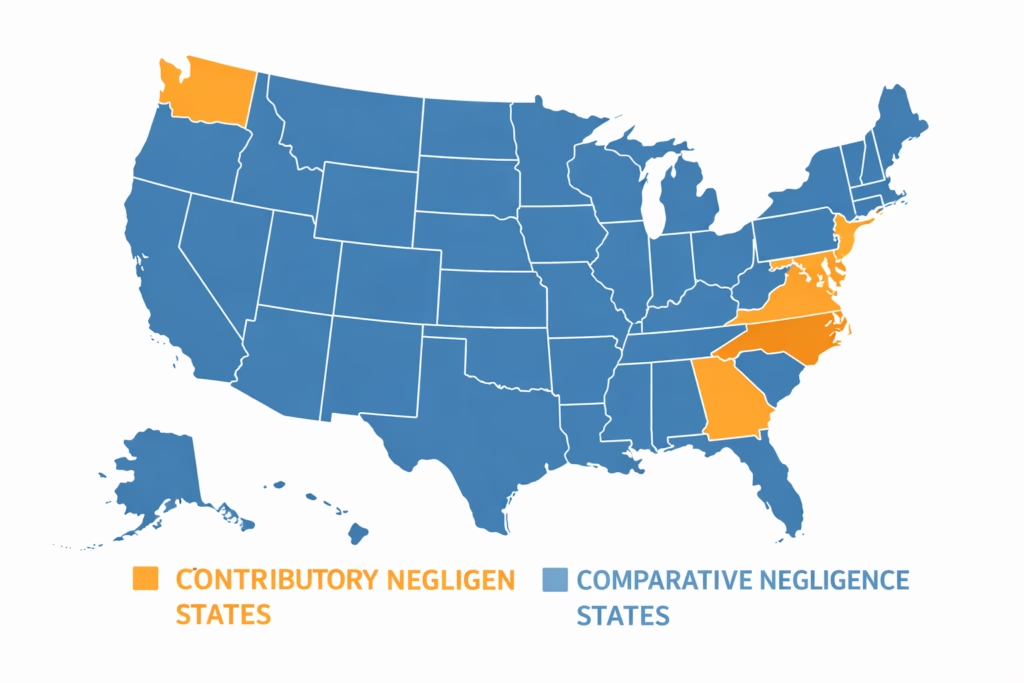
A few states use contributory negligence. In contributory negligence states like Alabama, Maryland, North Carolina, Virginia, and D.C., even small fault on your part can bar recovery.
Insurance companies love tickets. Adjusters lean heavily on citations and police reports when deciding who’s “at fault,” but they can still get it wrong—especially if they only hear the other driver’s story.
Contesting a ticket can be strategic. Paying or pleading to a violation might be used against you in an injury claim in some states, so talk to a lawyer before you decide.
Legal help levels the playing field. A car accident lawyer can gather evidence beyond the ticket, challenge fault decisions, and negotiate with insurers that want to blame you.
“Fault” is really about negligence—lawyer-speak for careless or unsafe behavior that causes harm.
To hold someone legally responsible, injury law usually looks at four elements:
Duty – Every driver has a duty to follow traffic laws and drive reasonably safely.
Breach – The driver failed that duty (for example, by speeding or running a light).
Causation – That failure caused the crash.
Damages – Someone was injured or suffered financial losses.
Traffic laws help define what “reasonable” driving looks like. Violating a safety law can be powerful evidence of negligence, especially if the violation directly leads to the crash. In some states, that’s called negligence per se (negligence “in itself”) when a safety statute is broken and causes harm.
Different players have different jobs:
Police officers decide whether to issue tickets and what to record in the crash report.
Insurance adjusters review the report, driver statements, and evidence to decide who they think was at fault for claim purposes.
Judges or juries decide fault if the case goes to court.
They all look at evidence, such as:
The crash report and diagram
Any traffic citations (tickets) issued
Photos and video of the scene and damage
Witness statements
Dashcam or traffic camera footage
Vehicle black box / EDR data in serious crashes
Accident reconstruction experts in contested cases
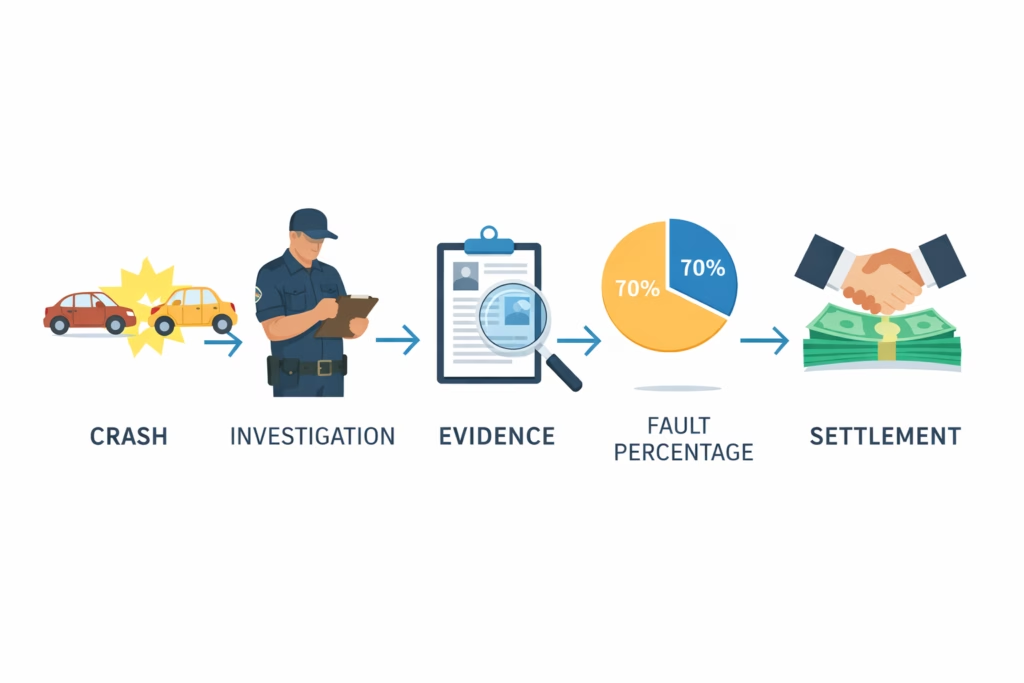
If you get a ticket at the scene, it usually means the officer believes you violated a traffic law. That’s important, but it’s not the last word.
Insurers and courts treat a ticket as one piece of evidence—sometimes a strong one—when they decide fault.
The officer may not have seen the crash; they’re basing their decision on what they see afterward and what people tell them.
Tickets can be challenged in traffic court. If the ticket is dismissed or you’re found not guilty, that can help your injury case (though it doesn’t automatically win it).
On the flip side, if you plead guilty or “no contest,” or just pay the ticket, that can sometimes be used to argue you were negligent, depending on the law in your state.
Not all violations are equal when it comes to fault.
Moving violations involve how the vehicle is driven:
Speeding
Running a red light or stop sign
Failure to yield
Following too closely
Distracted driving (like texting)
DUI or impaired driving
These are often directly tied to crash risk. For example, federal data show speeding contributed to 29% of U.S. traffic fatalities in 2023, with 11,775 people killed in speeding-related crashes.
Non-moving or administrative violations include things like:
Expired registration
Broken taillight
No proof of insurance
Missing inspection sticker
These usually don’t decide fault unless they somehow contributed to the crash (for example, a missing headlight at night making your car effectively invisible). In many claims, they’re treated as separate issues that might lead to fines, but not liability for the collision itself.
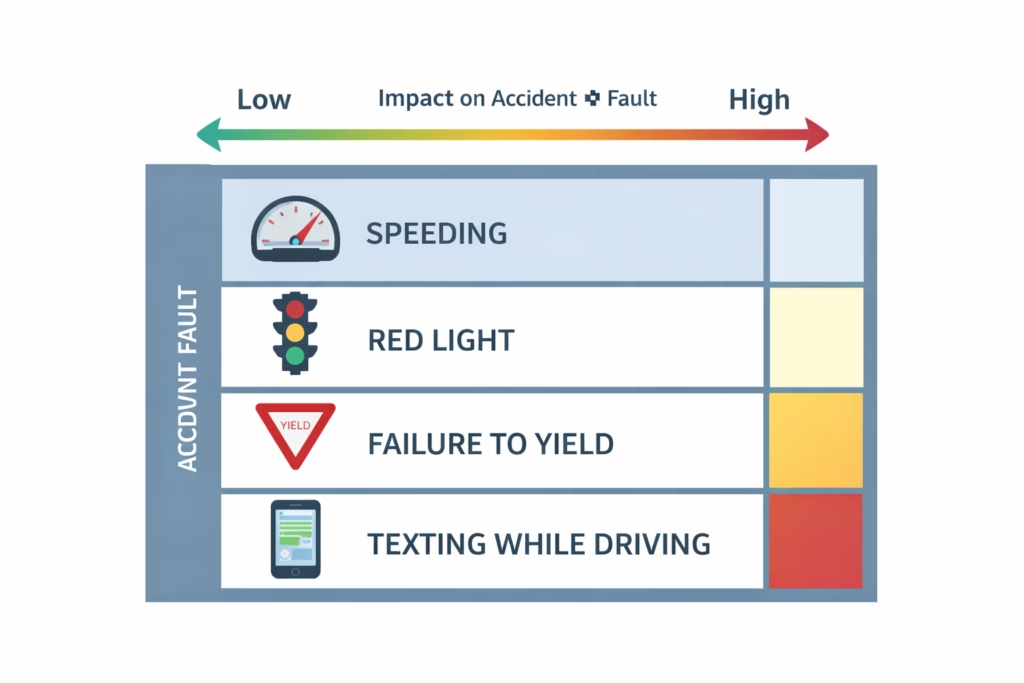
It’s very common for both drivers to be cited—maybe one for speeding and the other for failure to yield.
In those situations:
Each driver’s violation is weighed as part of the overall negligence picture.
Insurers or courts may split fault by percentage—70/30, 60/40, 50/50, etc., depending on the facts.
Those percentages then interact with your state’s negligence rules (comparative vs contributory), which we’ll break down below.
So if both drivers get tickets, your case isn’t doomed—it just becomes about how much fault each person gets assigned.
Speeding is one of the most common—and deadly—traffic violations in serious crashes.
In 2023, speeding was a factor in about 29% of all traffic fatalities, killing an estimated 11,775 people in the U.S.
Why this matters for fault:
The faster a car is moving, the longer it takes to stop and the less time the driver has to react.
Higher speed means more severe impact, which can make injuries and damage worse.
If a driver was speeding and couldn’t stop in time, that’s often a clear breach of the duty to drive safely.
In a rear-end crash, for example:
A driver rolling slowly toward a stop sign might be negligent.
A driver barreling toward stopped traffic at 20 mph over the limit is far more likely to be found primarily at fault.
Some states specifically define “excessive speeding” or “reckless speeding,” which may strengthen an injury claim if the other driver was going far above the limit.
Running red lights and failing to yield at intersections are classic fault-makers.
Research from the Insurance Institute for Highway Safety (IIHS) shows that over a thousand people were killed and more than 135,000 injured in red-light-running crashes in 2023.
In fault terms:
Blowing through a solid red light or stop sign is usually strong evidence of negligence (and often negligence per se).
In “T-bone” or left-turn crashes, investigators look at who had the right of way and whether someone tried to “beat the light.”
Failure-to-yield crashes (for example, turning left in front of oncoming traffic) are frequently blamed on the driver who didn’t yield.
Intersection and right-of-way rules are some of the most important traffic laws when it comes to assigning fault.
Distracted driving (especially phone use) has become a major focus in traffic enforcement.
When there’s evidence that a driver was:
Texting
Using social media
Holding a phone call instead of hands-free
Fiddling with in-car screens
…it can be powerful proof of negligence.
Evidence in these cases might include:
Cell phone records
App logs or screen recordings (in some circumstances)
Dashcam footage showing a driver looking down at their phone
Witnesses who saw the driver texting
Many states now have specific handheld phone bans or texting-while-driving laws, which can support negligence per se arguments if violated.
Driving under the influence or driving recklessly is about as serious as it gets.
DUI/drunk driving laws are designed to protect public safety; violating them and causing a crash can put the driver in a very bad position in civil court.
In some jurisdictions, punitive damages may be available in DUI cases, on top of compensation for medical bills, lost wages, and pain and suffering.
Even then, your own actions still matter. In comparative negligence states, your compensation might be reduced if your own negligence contributed, even if the other driver was drunk.
Two people can have the exact same crash in different states and end up with very different outcomes because the negligence rules are different.
Most states use some form of comparative negligence.
Basic idea:
Each party gets a percentage of fault (for example, 70% you, 30% the other driver).
Your damages are reduced by your percentage.
There are two main types:
Pure comparative negligence
You can recover even if you’re 90% or 99% at fault—your damages are just reduced by that percentage.
Modified comparative negligence
You can recover only if your fault is below a certain threshold (usually 50% or 51%).
For example, if your state has a “51% bar” and you’re found 52% at fault, you may receive nothing.
In both systems, a traffic ticket is evidence that can raise your percentage of fault, but it doesn’t automatically kill your case.
Only a handful of jurisdictions still use strict contributory negligence:
Alabama, Maryland, North Carolina, Virginia, and Washington D.C.
Here, the rule can be brutally simple:
If you are found even 1% at fault, you may be completely barred from recovering damages from the other driver.
In these states, a minor traffic violation on your part—rolling through a stop sign, going slightly over the speed limit—can become a big deal in an injury case if the defense can link it to the crash.
That’s why handling your ticket carefully and getting legal advice early is especially important in contributory negligence states.
[Image: U.S. map highlighting contributory-neglect states vs comparative states.]
Because the rules vary so much:
Pleading guilty to a ticket might be harmless in one state but devastating in another.
The way insurers evaluate fault can also differ depending on local law and court decisions.
A local car accident lawyer can:
Explain how your state treats comparative or contributory negligence
Evaluate how your traffic violation might affect your case
Coordinate strategy for both traffic court and your injury claim
833-GET-PAID can connect you with help to understand the rules where your crash happened.
Insurance companies aren’t neutral judges—they’re businesses trying to control payouts.
After a claim is filed, an adjuster will typically:
Review the police report and any citations
Take recorded statements from drivers (and sometimes witnesses)
Look at photos and vehicle damage
Check for any available video (dashcams, doorbell cameras, or traffic cameras)
Compare the facts to internal guidelines for assigning “at-fault” or “not-at-fault” status
Tickets, especially for moving violations, often weigh heavily in those internal guidelines.
Insurers may also look at your driving history when evaluating your claim:
Multiple prior speeding tickets or at-fault crashes can lead them to view you as “high-risk,” which might influence how they see the new crash—even though past violations usually can’t be used in court to prove negligence in this particular incident.
Still, your record can affect:
How generous the insurer is in settlement talks
Your premiums after the claim
Whether they try extra hard to pin fault on you
A lawyer’s job is to bring the focus back to this crash and the evidence that actually matters.
Common problems:
Relying almost entirely on the ticket and not digging deeper
Accepting the other driver’s story because they called first
Ignoring conflicting evidence like photos or independent witnesses
If the insurer’s fault decision is wrong—or unfair—you don’t have to just accept it. A lawyer can:
Provide additional evidence and arguments
Escalate the claim inside the insurance company
File a lawsuit and let a jury decide fault instead
This is where you can do the most to protect your health, your record, and your claim.
Right after the crash:
Move to a safe spot if you can.
Call 911 if anyone might be hurt or there’s major damage.
Get checked out by medical professionals—even if you “feel fine” at first. Some injuries show up hours or days later.
Your health comes first, and early documentation of injuries also helps your claim.
If it’s safe and you’re physically able:
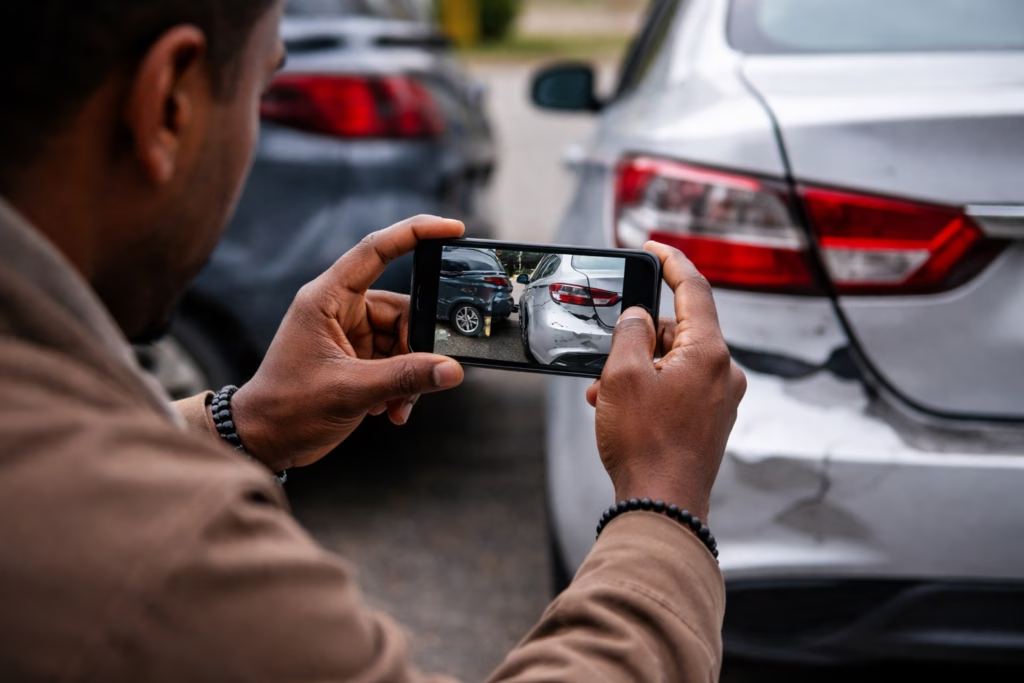
Take photos and videos of vehicle damage, skid marks, road conditions, traffic lights/signs, and any visible injuries.
Capture the positions of the vehicles before they’re moved, if possible.
Get names and contact information for witnesses.
This evidence can later challenge assumptions made in the ticket or police report.
With the officer, the other driver, and insurers:
Stick to facts, not guesses or apologies.
Avoid saying things like “It was my fault” or “I didn’t see you,” which can be twisted into admissions of negligence.
You’re allowed to be polite without taking legal blame.
When you’re issued a citation:
Make sure your name, vehicle info, and the law cited are accurate.
Note the exact statute number and description of the offense.
Write down your court date and any response deadlines.
Don’t just shove the ticket in your glovebox and forget about it. The decisions you make around that ticket can affect your injury case.
Before you:
Pay the ticket
Plead guilty or no contest
Go to court on your own
…it’s smart to talk with a car accident lawyer who understands both traffic and injury law in your state.
A lawyer can help you:
Weigh whether fighting the ticket is worth it
Understand whether a conviction or plea could be used against you in your claim (rules vary by state)
Coordinate your traffic court strategy with your injury case strategy
833-GET-PAID can connect you with help to review your options if you’re juggling injuries, a ticket, and an insurance claim all at once.
A ticket feels final, but it can be overcome with stronger evidence.
The citation is just one part of the police documentation. There’s often more:
A narrative section where the officer describes what happened
A diagram showing vehicle positions and directions
Sometimes bodycam video or still photos attached to the report
In disputed cases, traffic camera or intersection footage can show:
Who actually entered the intersection on red
Whether a driver was speeding or following too closely
Whether someone made a sudden, unsafe maneuver
Independent witnesses can be incredibly helpful—especially if they don’t know either driver.
So can:
Dashcam footage from either vehicle or nearby cars
Doorbell cameras or business security cameras facing the road
The pattern of damage on the vehicles, which accident reconstruction experts can match to certain types of impacts or speeds
All of this can change a case where the ticket seems to point one way, but the facts point another.
In serious or high-value cases, lawyers often bring in accident reconstruction experts. They can:
Visit the scene
Measure skid marks and debris fields
Use physics and software to model the crash
Explain to a jury how each driver’s actions contributed
If the other driver violated a safety statute (like a red light or DUI law) and that violation clearly caused the crash, your lawyer may argue negligence per se, which makes the liability part of your case stronger.
Tickets affect more than just “who was at fault” — they influence how much money actually changes hands.
If the other driver is cited for a crash-related moving violation (speeding, red light, failure to yield, DUI), that usually helps your claim by:
Supporting the argument that they breached a safety duty
Making insurers more willing to accept liability
Providing a powerful piece of evidence at trial if the case gets that far
Example:
Your damages (medical bills, lost wages, pain and suffering) total $100,000.
The other driver is clearly ticketed for running a red light, and there’s supporting video.
If your state uses comparative negligence and you’re found 0% at fault, you might be entitled to the full $100,000 (subject to policy limits).
This is where people panic—often unnecessarily.
Consider these scenarios:
You were going 5 mph over the limit, but the other driver pulled out directly in front of you from a stop sign without looking.
You rolled a stop sign slowly, but the other driver slammed into you while texting and speeding heavily.
In many comparative negligence states, that might lead to:
You being assigned some percentage of fault for your violation, but
The other driver carrying more of the blame because their conduct was the primary cause.
Your compensation might be reduced, not eliminated.
Finally, tickets connected to crashes can influence:
Whether your insurer labels the crash as “at-fault” or “not-at-fault” in its internal system
Your premiums for years after the crash
Your ability to switch insurers without big rate jumps
A strong liability case can reduce how much your record gets dinged in the long run.
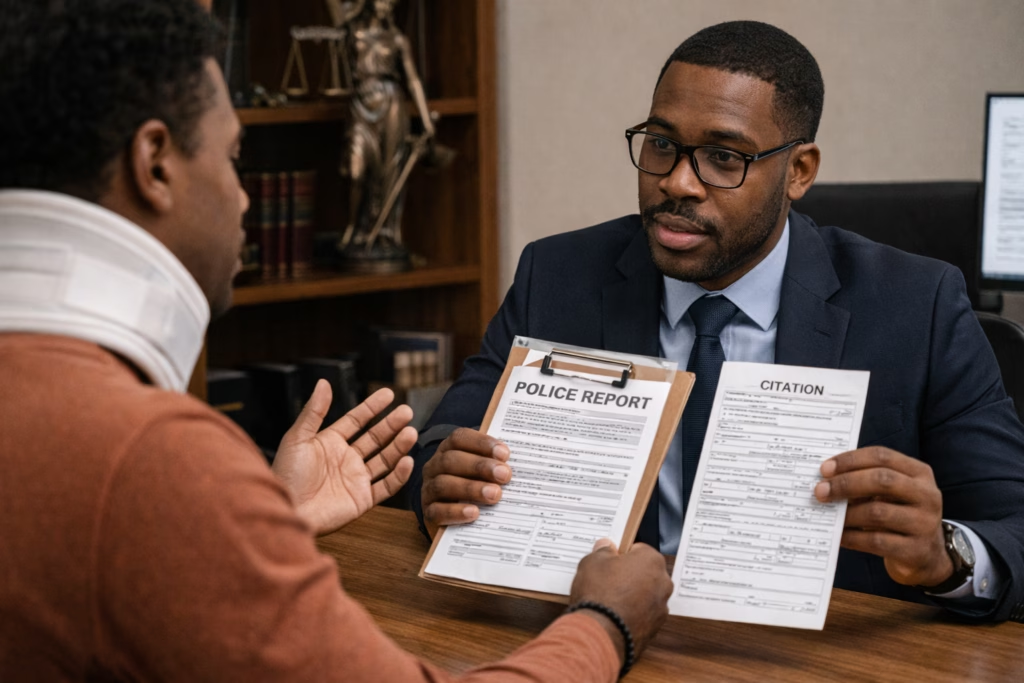
You don’t have to untangle all of this alone—especially when you’re hurt and staring at a citation.
A car accident lawyer working with you through 833-GET-PAID can:
Review your ticket, police report, and evidence to see whether fault was assigned fairly
Explain how your state’s comparative or contributory negligence rules apply to your situation
Help you decide whether to fight or pay your ticket, so you don’t accidentally damage your injury case
Gather additional evidence—witnesses, video, experts—to challenge bad fault decisions
Negotiate with insurers that want to use your ticket or past violations against you
If you’re dealing with:
Serious injuries
A ticket you’re worried about
An insurer trying to blame you
A crash in a contributory negligence state
…it’s especially important to get legal advice early.
A ticket at the scene of a crash feels like a judgment. It isn’t.
What really decides who pays is evidence + state law—not just a slip of paper.
Here’s a simple next-steps checklist:
Get medical care and follow your treatment plan.
Collect and save evidence: photos, videos, witness info, and any documents.
Read your ticket and calendar your court date and deadlines.
Stay cautious with statements to the other driver, insurers, or social media.
Talk to a car accident lawyer—through 833-GET-PAID or another trusted resource—about how the ticket and your state’s negligence rules affect your rights.
A traffic violation after a crash is serious, but it’s not the end of your story—and it doesn’t automatically erase your right to be compensated if someone else’s negligence hurt you.
No. A ticket is important evidence that you violated a traffic law, but insurers and courts still look at all the evidence before deciding who was legally at fault.
Often yes. In most comparative negligence states, your compensation is reduced by your share of fault instead of being completely barred.
Both tickets can be used as evidence. Investigators may assign percentages of fault to each driver based on what violations occurred and how they contributed to the crash.
Usually not, unless the violation directly contributed to the collision. They’re often treated separately from the question of what actually caused the crash.
It can be very important to at least talk with a lawyer first, because a guilty plea or conviction might be used against you in your injury case, depending on your state’s rules.