
Home » Running a Red Light Car Accident: How Fault Is Determined

Running a red light is one of the fastest ways for a normal day to turn into a life-changing crash. But even when it feels obvious who was to blame, fault in a red-light accident isn’t always as simple as “the person with the red light is 100% at fault.”
This article is a spoke from our hub, “Car Accidents and Traffic Violations: Who’s at Fault?” and zooms in on one of the most common and serious traffic violations: running a red light.
We’ll walk through how police, insurers, and courts actually figure out who ran the light, how much fault each person bears, and what you can do after a red-light crash to protect your claim.
Important: This article is general information, not legal advice. 833-GET-PAID is not a law firm. It’s a national marketing network that connects you with independent, licensed attorneys in your state who can give legal advice about your specific situation.
In everyday conversation, people say “ran the red” about almost anything that happens near a red signal. Legally, it’s more specific.
In most states, a driver is considered to have run a red light when they:
By contrast, finishing a turn already started on green or yellow is usually not considered running the red:
Every state’s traffic code has its own wording, but the basic idea is consistent: the violation happens when you enter on red, not just when you happen to be in the intersection as the color changes.
Traffic tickets and civil fault are closely related, but they’re not the same thing.
Most car accident claims revolve around negligence, which generally means:
Running a red light usually checks the first two boxes easily, so it’s often treated as negligence per se—a fancy way of saying that breaking a safety law is itself strong evidence of negligence.
However:
That’s why the hub topic, “Car Accidents and Traffic Violations: Who’s at Fault?”, is so important: a violation is a starting point for fault, not the entire story.
Red-light crashes are disproportionately serious. Intersection collisions often involve:
National safety data consistently shows that red-light running causes hundreds of deaths and well over a hundred thousand injuries each year, and a significant share of those who die are people other than the red-light runner—such as occupants of the other vehicle, pedestrians, or cyclists.
After a red-light crash, several different players may look at the same facts and reach slightly different conclusions:
Most red-light cases settle long before trial, but understanding that insurer fault decisions are not final can help you avoid feeling stuck if you disagree.
Fault in a red-light accident usually comes down to evidence that answers three key questions:
Common evidence includes:
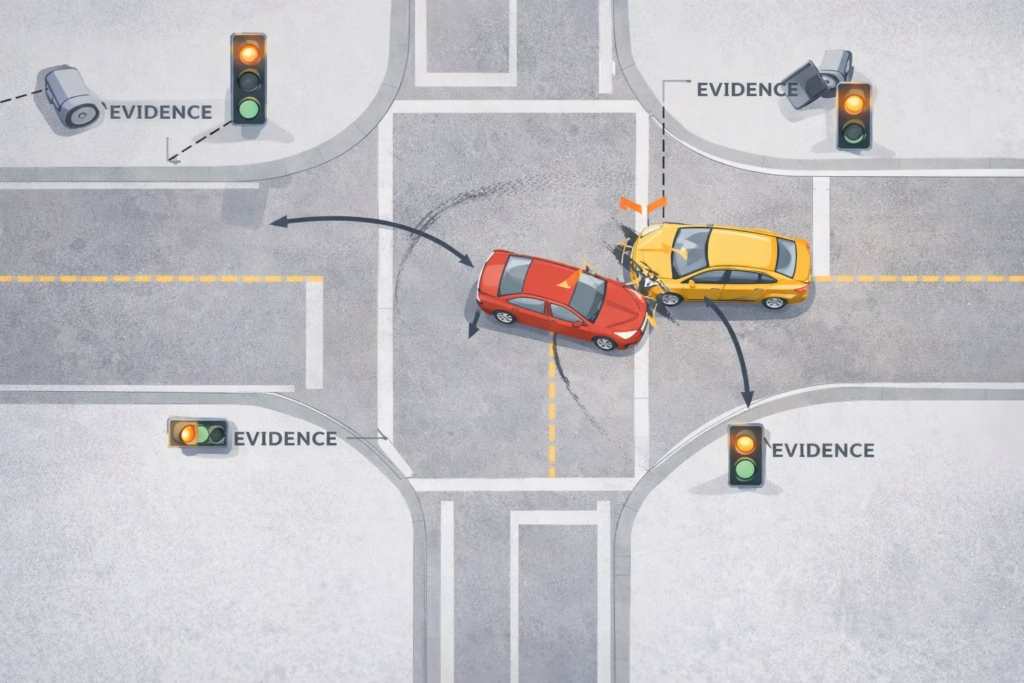
Being ticketed for running a red light—or getting a red-light camera citation—can feel like an automatic admission of fault. In reality, it’s more nuanced:
It’s also possible for tickets to be:
For your injury claim, the weight of the evidence matters more than the presence or absence of a ticket alone.
Even when one driver clearly ran the red, the other driver’s behavior can affect fault:
Insurance companies sometimes lean on these arguments to reduce what they pay—even when their driver obviously ran the red. That’s one reason having an attorney on your side can be so important.
Some of the trickiest red-light cases involve timing and turning:
These scenarios are where:
can become especially important.
A single red-light violation can trigger a chain reaction:
In a case like this, fault might be spread out among:
This kind of multi-vehicle, multi-insurer scenario is exactly where it helps to have a lawyer untangle the mess and protect you from being unfairly blamed.
How much any shared fault actually matters depends heavily on your state’s negligence rules:
Because these rules vary so much, it’s important to talk to someone who knows your state’s law. Crash Advocates can connect you with a local, licensed attorney who can explain exactly how your share of fault might be handled.
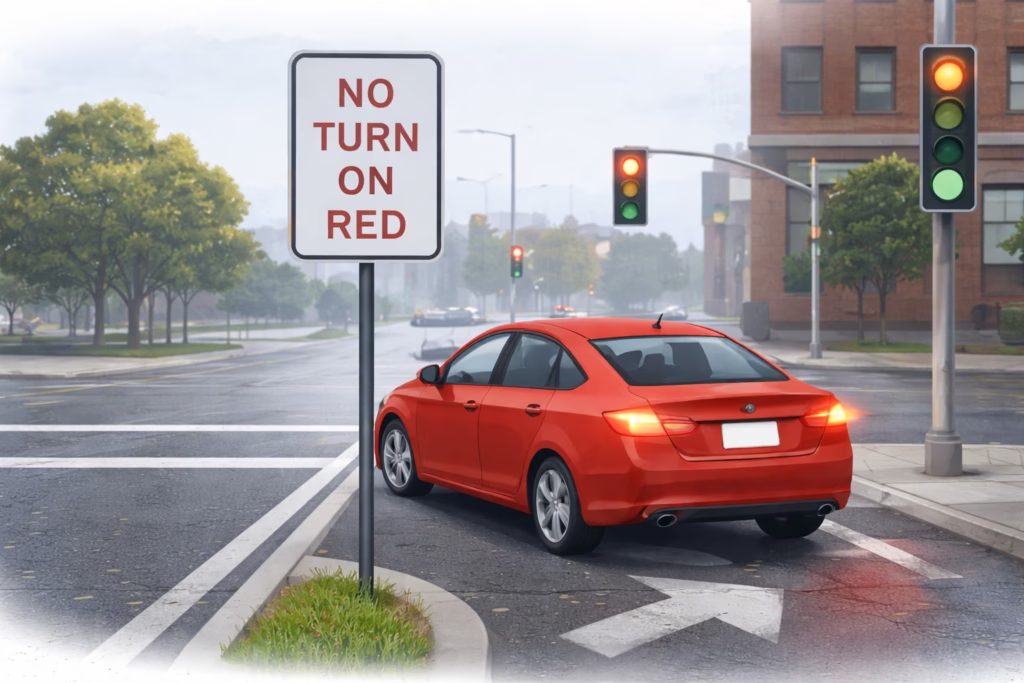
Right-on-red rules are a common source of confusion—and crashes.
Typical patterns:
Common crash scenario:
In these cases, fault analysis focuses on:
Complex signals can lead to honest mistakes that still count as negligence:
Investigators will evaluate:
Red-light running doesn’t just endanger other drivers. It’s especially dangerous for people outside vehicles:
In many serious red-light cases:
For injured pedestrians and cyclists, collecting witness information and any available video is especially important, because they often have no vehicle of their own to preserve dashcam footage or onboard data.
This section doubles as a practical checklist you can follow in most red-light accidents.
Even if injuries don’t seem severe at first, calling 911 creates an official record that the crash occurred.
In many jurisdictions, you’re legally required to report crashes involving injury, death, or significant property damage. Beyond that:
Before leaving the scene, ask how you can obtain a copy of the report.
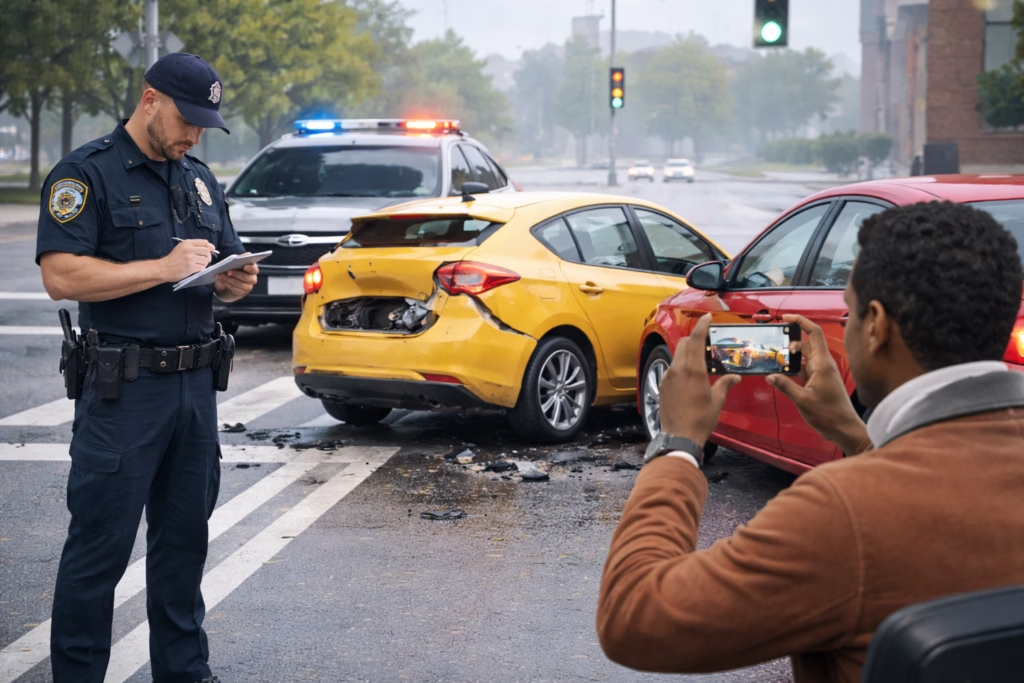
If your injuries allow and it’s safe:
This kind of on-the-ground documentation can be crucial, especially if there’s no clear camera footage later.
Some injuries—like whiplash, concussions, and soft-tissue damage—may not fully show up for hours or days.
Getting evaluated quickly:
Follow your doctor’s instructions and keep copies of all records, bills, and prescriptions.
Most auto insurance policies require you to:
However, when speaking with any insurer (even your own):
Insurers are businesses; they benefit from minimizing what they pay out.
In many red-light cases, especially where:
it’s smart to speak with a car accident attorney early.
An attorney can:
Crash Advocates can help you connect with an independent, licensed lawyer in your state—someone who understands your local laws and can advise you based on your specific situation.
Again, Crash Advocates itself is not a law firm and does not provide legal advice. It’s a national marketing network that routes your information to participating attorneys who handle legal representation.
Although details vary by state, a red-light citation may:
If a crash occurs, the citation can also influence how insurers and courts view fault, but remember: it’s only one piece of the puzzle.
From an insurer’s perspective, a traffic violation like running a red light is a big red flag. But adjusters still look at:
Common insurer strategies include:
This can reduce the amount offered, or justify denying the claim outright in some cases. That’s why strong evidence and legal guidance can be game-changing.
Here’s how fault might play out in a comparative-negligence state, with a simple numerical example:
In a pure comparative or modified comparative state (assuming you’re below the threshold), your recoverable amount might be:
In a contributory negligence state, if you were found even 1–5% at fault, you might recover nothing at all from the other driver, despite their red-light violation.
Because the numbers and thresholds vary from state to state, an attorney who knows your local law can give the most accurate picture of how shared fault affects your claim.
You may want to talk with a car accident lawyer—through Crash Advocates or otherwise—especially if:
The more complex the crash, the more there is at stake—and the more room there is for insurers to shift blame.

A typical attorney’s investigation may include:
The goal is to build a clear, evidence-backed story: who ran the red, how that caused the crash, how badly you were hurt, and what full compensation looks like.
If you’re dealing with a red-light crash, you may feel overwhelmed by:
833-GET-PAID exists to make the “what now?” part simpler:
If a driver ran a red light and turned your life upside down, you don’t have to untangle the fault and insurance maze alone. Help is available.
In most cases, the driver who enters an intersection on a red light is treated as the main at-fault party, but investigators still review all the evidence before deciding liability.
A ticket is strong evidence that you violated a traffic law, but on its own it usually does not automatically decide civil fault for an injury claim. Insurers and courts still look at the full circumstances of the crash.
In many states with comparative negligence rules, you may still recover compensation, but the amount can be reduced by your percentage of fault. In a few contributory-negligence states, any share of fault may bar recovery.
Adjusters rely on police reports, traffic camera footage, dashcam video, witness statements, and physical evidence like vehicle damage and skid marks to decide who likely had the right-of-way.
Get to safety, call 911, request a police report, take photos of the scene and traffic signal, gather contact information for witnesses, seek medical care, and talk to a lawyer or a service like Crash Advocates before giving detailed statements to insurers.